
ICSDS
Turning Regulatory Complexity into a Clear Digital Experience.
A technical service business needed a digital experience that worked for both experts and non-experts.
ICSDS is an independent regulatory compliance firm supporting organizations with Safety Data Sheets, product labeling, regulatory consulting, market-entry questions, and ongoing compliance needs. Its expertise is specialized, but the people arriving at the website do not all speak the same regulatory language. Some know exactly which service they need. Others only know that a retailer rejected a document, a label may be wrong, or a product needs to enter a new market.
OWDT approached the redesign as more than a visual refresh. The project became a complete digital experience program: research the buying context, clarify the audience, restructure information architecture, map user journeys, create a conversion-focused content system, establish a distinctive visual language, build the website, prepare paid-search landing pages, and launch a platform that could support measurable growth.
The Central Idea: Organize the experience around what the user knows at the moment they arrive – a service, a problem, or an outcome – and guide every path toward the same qualified consultation process.
Primary Intent Paths: 3
Core Personas: 6
Core Content Pages: 20
Paid Landing Pages: 10
For a specialized B2B business, clarity is not achieved by removing complexity. It is achieved by revealing complexity in the right order based on what the buyer needs to know next.
Final deliverables
strategy
personas
user journeys
intent framework
experience
ia + wireframes
cta system
progressive intake
content
messaging framework
design
ui direction
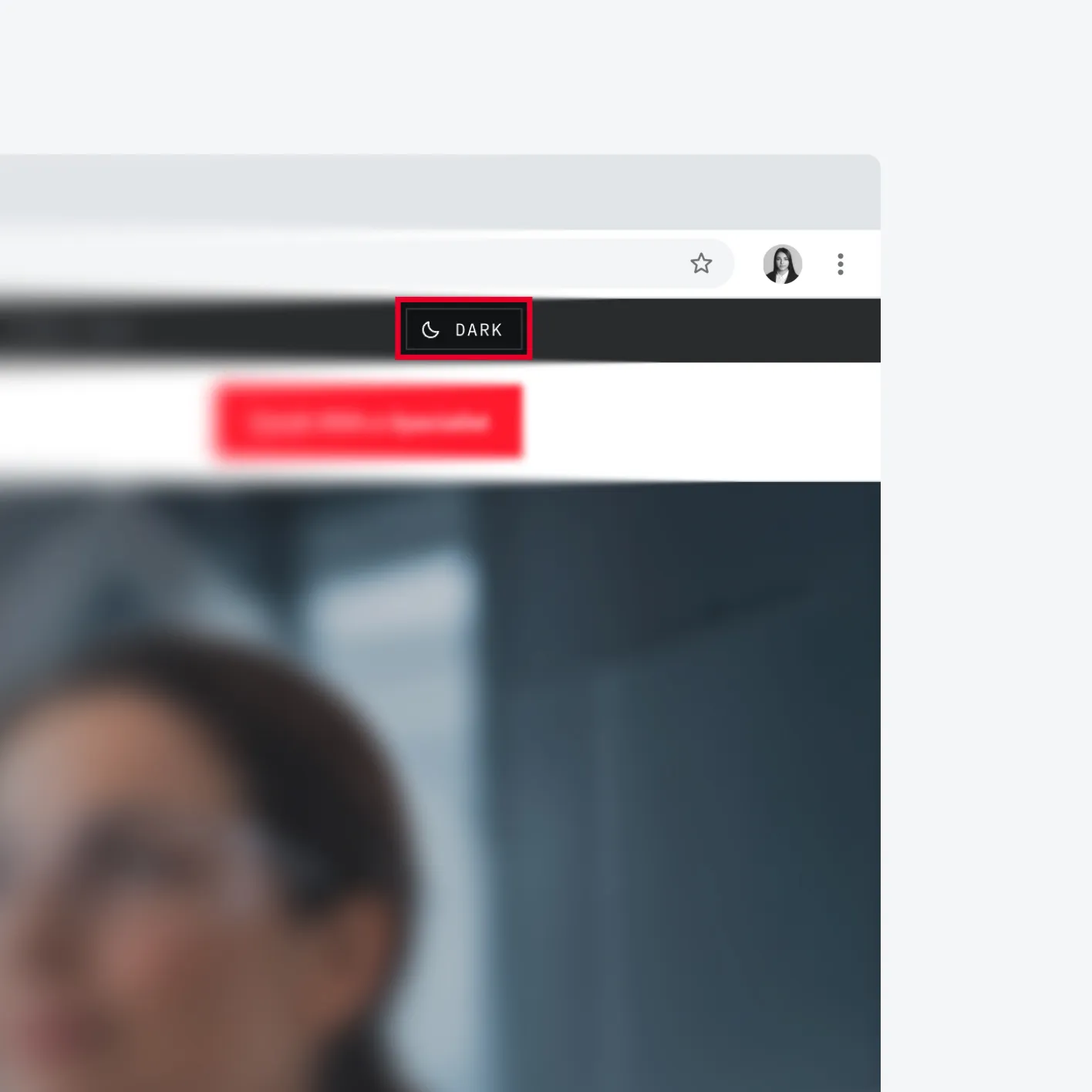
dark/light system
custom imagery
development
responsive cms build
reusable templates
content implementation
launch
qa + refinement
production deployment
growth foundation
Project Scope
Discovery and digital growth audit
Audience research and persona development
User journey mapping and intent architecture
Information architecture and wireframes
Full website content and CTA system
Visual design system and custom imagery
Responsive CMS development and content implementation
Google Ads landing page strategy and copy
Quality assurance, delivery, launch, and post-launch validation




The Challenge
The old model described services. The new model needed to help buyers recognize themselves.
Regulatory compliance is a high-consideration B2B purchase. A prospect may arrive with deep technical knowledge or with almost none. That creates a core experience problem: a site organized only by regulatory terminology can be precise for an expert while being difficult for a business owner, product manager, marketplace seller, or packaging team that is simply trying to solve an urgent issue.
Business and experience challenges
- Technical complexity: Translate specialized regulatory work into language that remains accurate without becoming opaque.
- Different levels of awareness: Serve both users who search for “SDS authoring” and users who search for a problem such as an SDS rejection.
- Conversion friction: Replace generic inquiry behavior with context-specific calls to action and a shorter first-contact experience.
- Service expansion: Present ICSDS as a broader regulatory partner, not only an SDS provider.
- Growth readiness: Create page structures and conversion paths that can support organic search, Google Ads, analytics, and future attribution.
- Trust and confidentiality: Make in-house expertise, practical support, NDA availability, and careful handling of technical information visible at the right moment.
The wider digital growth audit reinforced the need for this shift. It identified incomplete conversion measurement, limited attribution, generic CTA language, a long first-contact form, and limited use of dedicated conversion landing pages. The redesign therefore had to make the site easier to use today while also creating the foundation for more disciplined acquisition and measurement tomorrow.
Research & Discovery
Research began with the business model, the buyer’s vocabulary, and the moment that triggers the search.
The discovery phase combined a review of the existing website and service portfolio with the commercial realities behind regulatory work. Rather than treating “compliance” as one broad audience need, the team examined who initiates projects, what creates urgency, what evidence buyers need before sharing sensitive information, and how search language changes according to awareness.
What we researched
- Service landscape: SDS authoring, revisions, translations, portfolio support, product labeling, retailer requests, GHS/HazCom, TSCA, gap assessments, and market entry.
- Audience roles: Regulatory affairs, EHS/SDS program owners, packaging and product compliance teams, growing brands, import/export leads, and R&D/product development.
- Trigger events: Launches, retailer requests, rejected documentation, formulation changes, market expansion, acquisitions, portfolio maintenance, and regulatory updates.
- Trust requirements: In-house expertise, confidentiality, practical communication, market-specific knowledge, clear scope, and evidence of a disciplined process.
- Search behavior: Direct service searches, problem-led searches, and business-outcome searches that may not use regulatory terminology at all.
- Research Insight: The same underlying service can be purchased from three very different mindsets. The website should not force every buyer to translate their problem into regulatory terminology before they can begin.
The three-intent model
- Service Intent
“I know what I need.” SDS authoring, SDS translation, GHS/HazCom, product labeling. - Problem Intent
“Something is wrong.” My SDS was rejected. Is my label compliant? A retailer is asking for documentation. - Outcome Intent
“I need to get somewhere.” Sell in the U.S., enter another market, launch a product, keep a portfolio current.

Information Architecture & Wireframe
The information architecture became a routing system, not a catalog.
A dual-navigation model was developed to serve both technically fluent buyers and visitors who only know the problem or desired outcome. The structure keeps “Services” for precise technical discovery while adding “Solutions” for plain-language problems and commercial goals. This prevents the website from asking every visitor to begin with an acronym or regulation.
Primary structure
- Services: Technical work-streams
- Solutions: Problems + outcomes
- About: Operating model + trust
- Resources: Insights + FAQs
Wireframe system
Rather than design twenty unrelated pages, OWDT defined repeatable page families with deliberate section order and conversion logic. This gave the experience consistency while allowing each regulatory topic to carry the right depth.
- Homepage: positioning, intent router, core services, trust, process, and primary conversion
- Service overview: technical map with plain-language explanations
- Service detail: scope, triggers, what ICSDS can support, what is needed to start, proof, and CTA
- Problem solution: start with the evidence and reduce uncertainty without overpromising a universal fix
- Outcome solution: begin with the commercial objective, then reveal regulatory work progressively
- About: shift from biography to why the operating model is trustworthy
- FAQ: answer recurring questions while routing users to deeper services
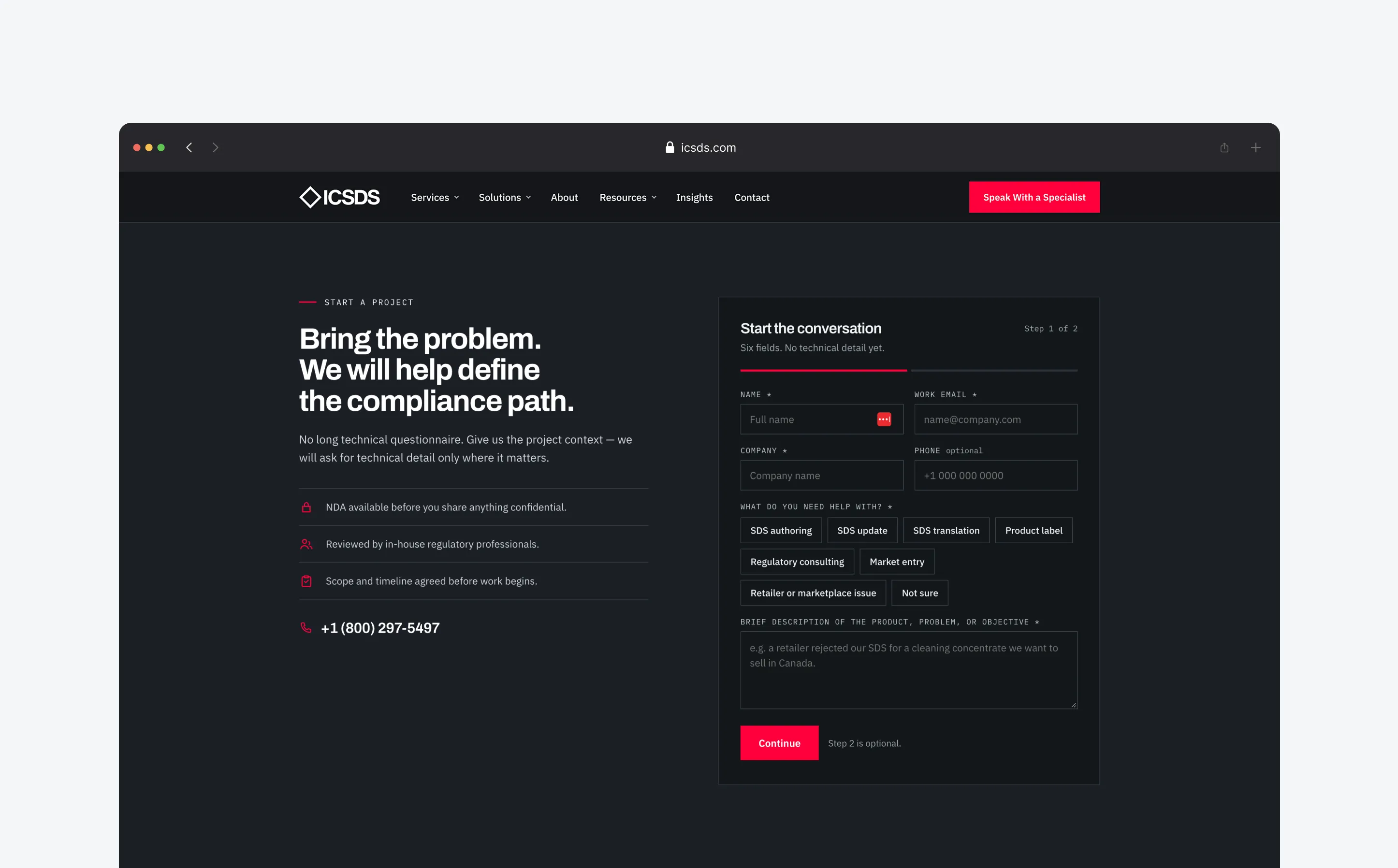
- Contact/Start a Project: progressive intake with confidentiality cues and conditional document upload
- Paid landing pages: minimal distraction, message match, proof, and focused conversion
Ux Principle: The first screen should not assume that the visitor knows an acronym. Let users enter through their own level of understanding, then progressively introduce regulatory detail.
Content Strategy & Conversion
The copy was written to make expert work understandable without making it simplistic.
The content system had two jobs at once: explain specialized regulatory services accurately and help commercially focused buyers understand why the work matters. The writing therefore moves from business consequence to regulatory context to scope – rather than opening every page with legal or technical exposition.
Content framework
- Start with the buyer’s situation, not the regulation.
- Explain the business consequence without fear-based messaging.
- Show the specific ICSDS work-stream that addresses the issue.
- Establish proof through in-house expertise, confidentiality, global support, and practical communication.
- Ask for the minimum information required to start a qualified conversation.
A CTA system matched to intent
- Known service: Request an SDS Quote / Speak With a Compliance Specialist
- Problem: Tell Us What Happened / Review My Product Label
- Outcome: Plan My U.S. Market Entry / Plan My International Expansion
- Uncertain visitor: Help Me Identify the Right Service
Example Message: “Review the label before a compliance issue becomes a packaging problem.”
Example Message: “Know what is missing before the market tells you.”
The full content program covered the homepage, About, Services, SDS authoring and lifecycle pages, regulatory consulting, GHS/HazCom, TSCA, gap assessments, global market entry, consumer product labeling, retailer/marketplace compliance, solutions pages, FAQs, and project intake with CTAs built into every page rather than added as a generic footer.

Visual Design
A technical brand language built from contrast, control, and precision.
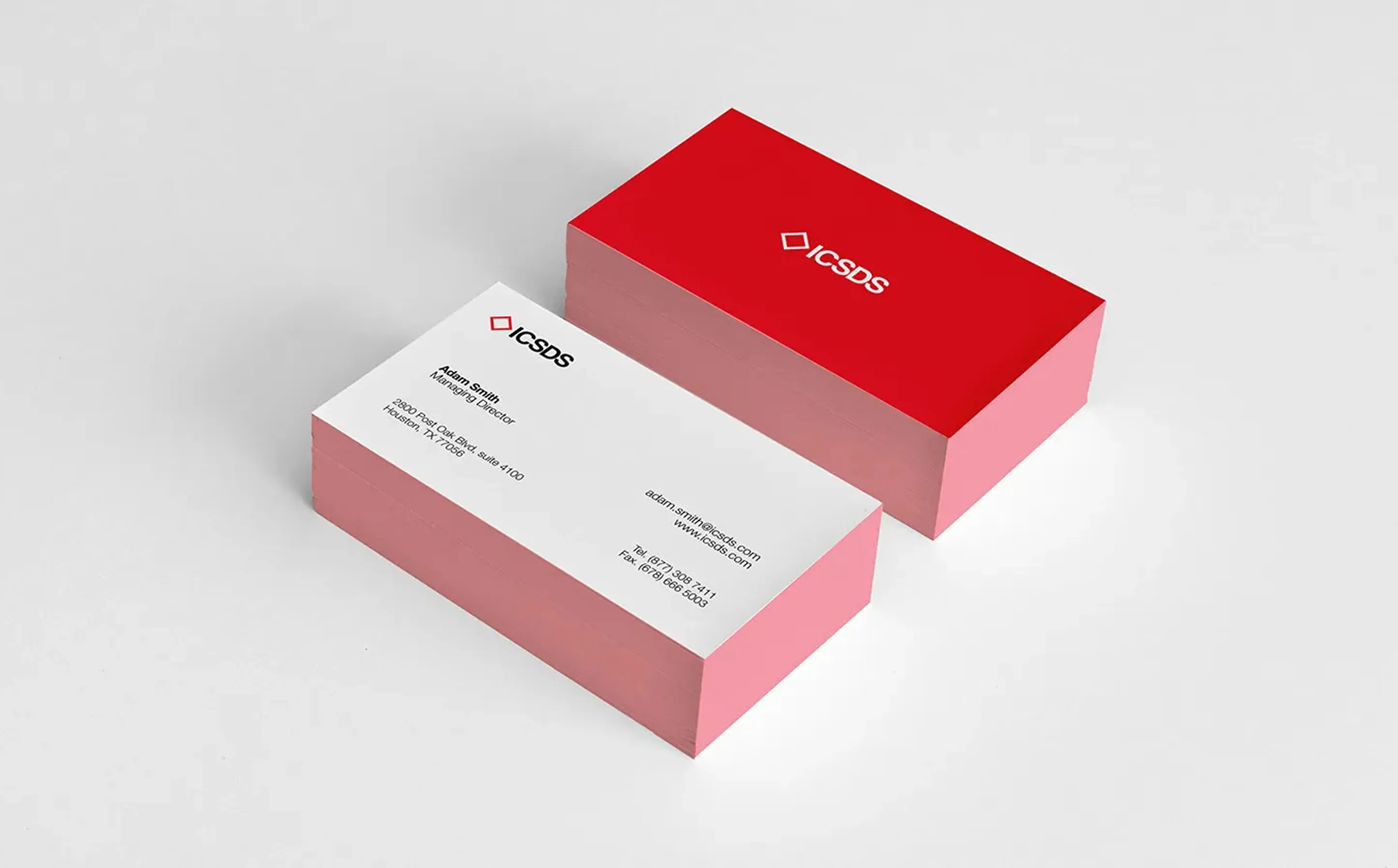
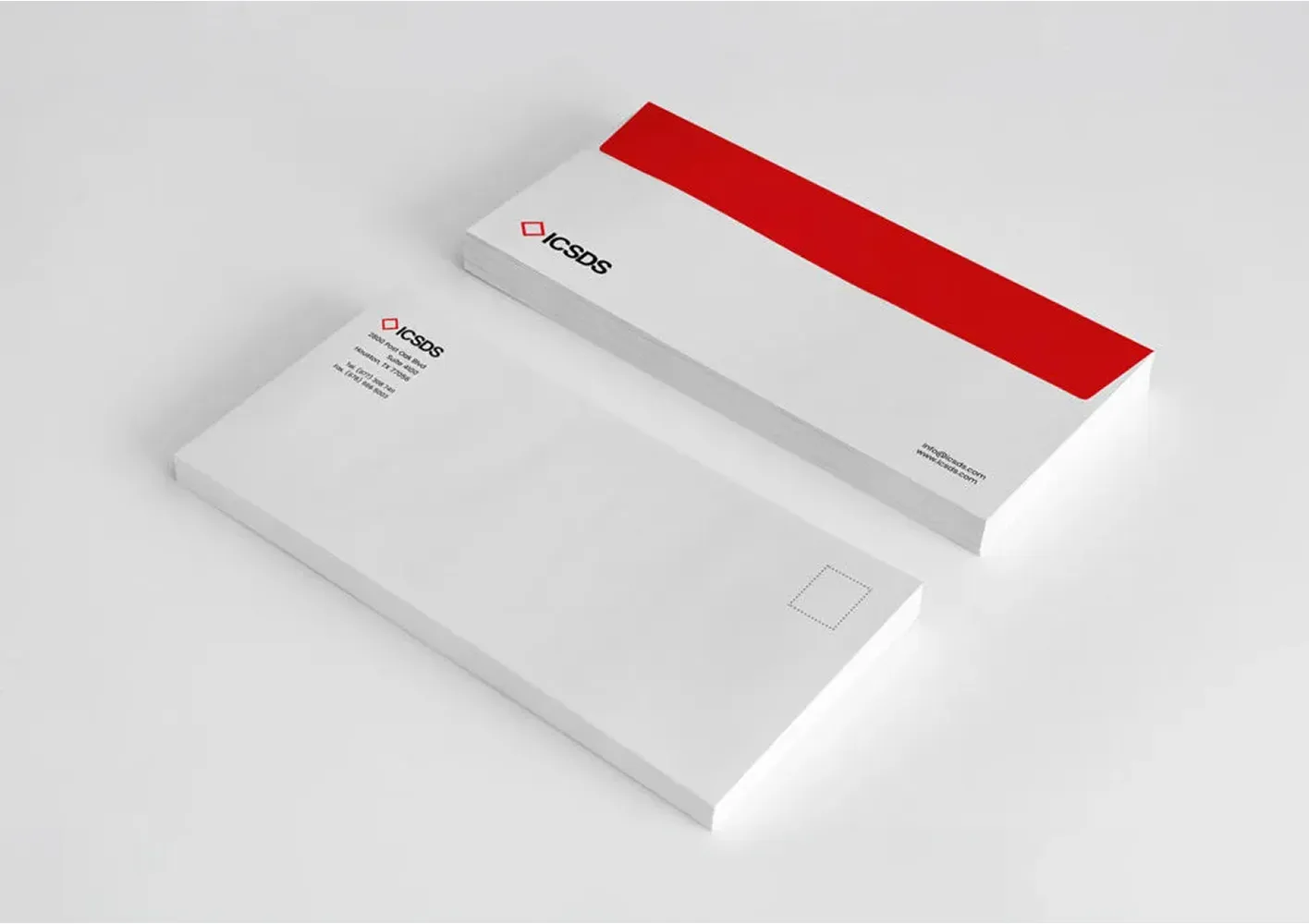
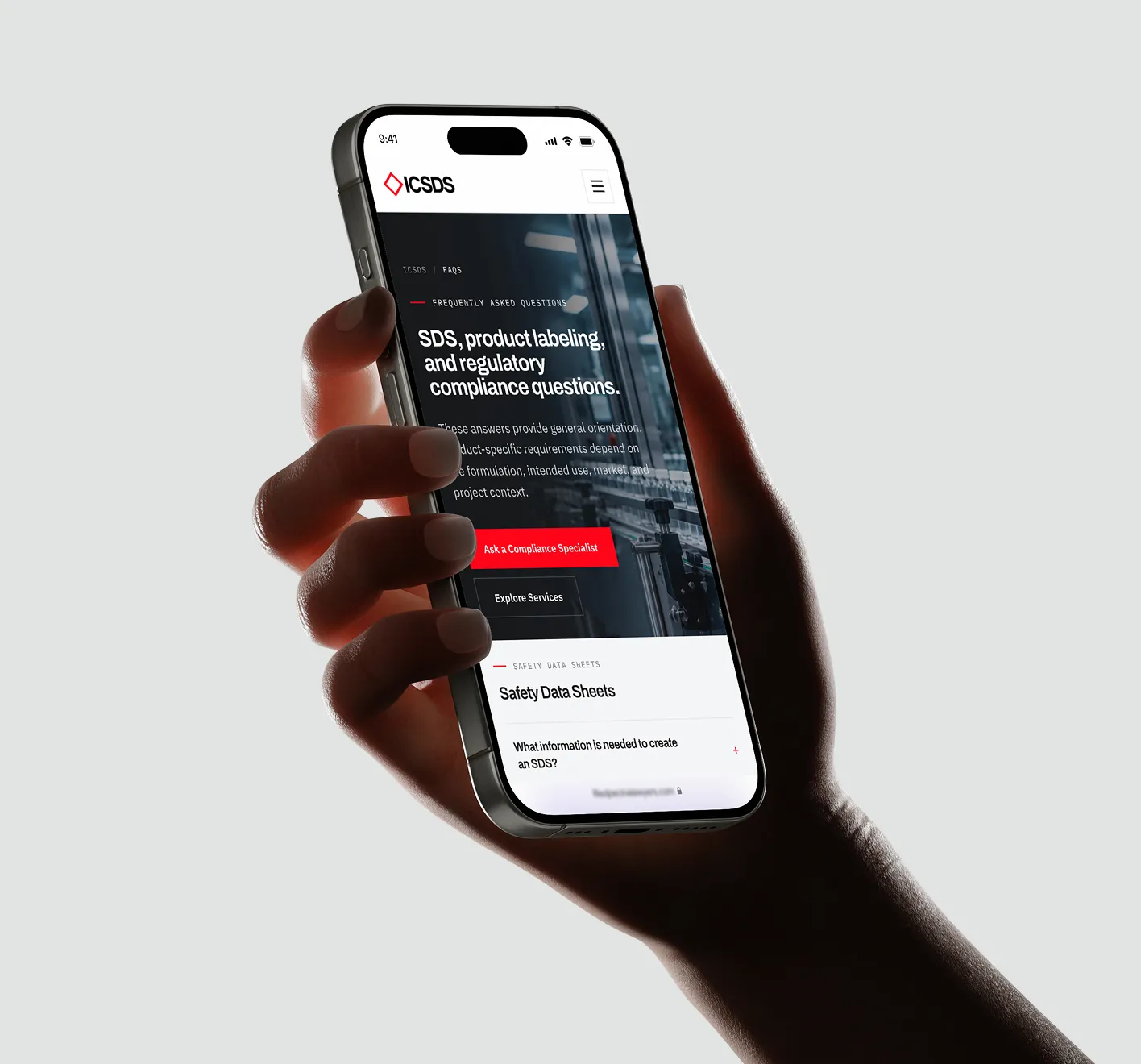
The design direction avoids the visual clichés of both generic consulting firms and laboratory stock photography. A disciplined black, white, gray, and signal-red system gives ICSDS a more authoritative and contemporary presence while keeping long technical content readable.
Design principles
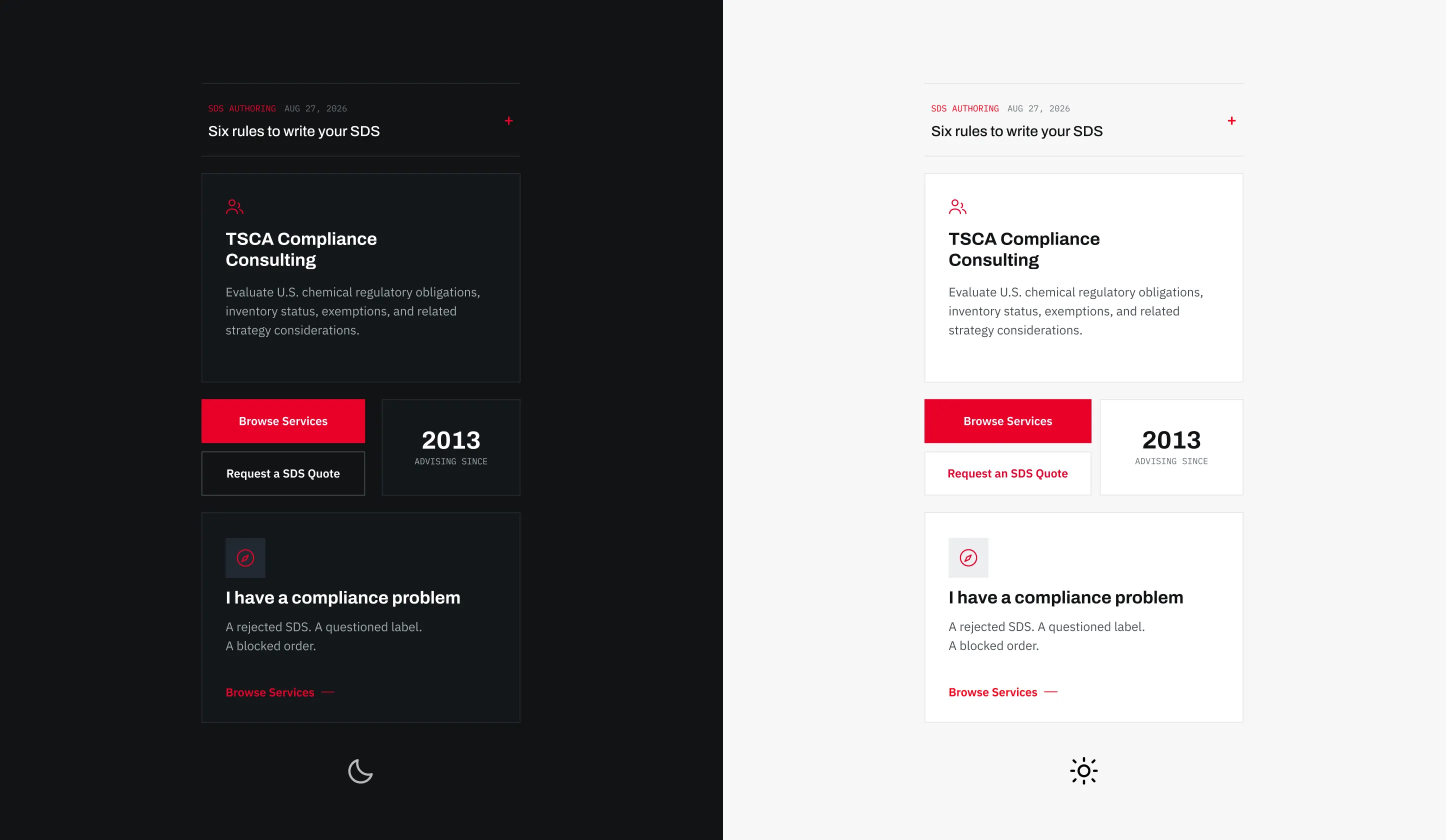
- Dark hero zones create strong contrast for positioning statements and high-priority CTAs.
- Light content zones make longer regulatory explanations easier to scan and prevent the site from feeling visually heavy.
- Red functions as a controlled signal color for actions, markers, regulatory cues, and small moments of emphasis.
- Typography uses strong hierarchy, short line lengths, and generous spacing to make technical information feel structured rather than dense.
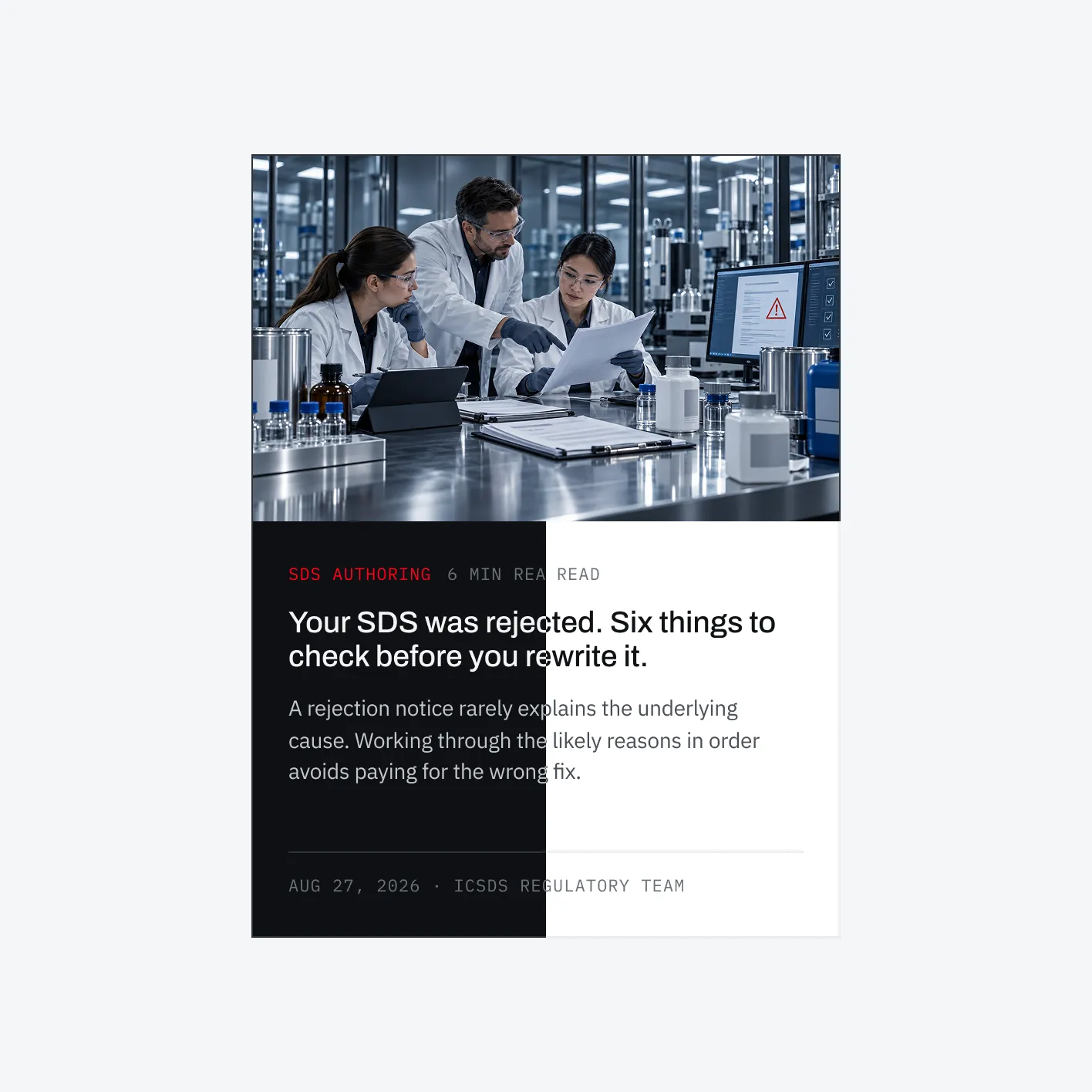
- Custom imagery connects global markets, documentation, packaging, hazard communication, and industrial products without embedding marketing copy into the artwork.
- Reusable cards, checklists, section labels, and split layouts create a systematic visual rhythm across service and solution page
Paid Search & Landing Page Strategy
The website was designed to support acquisition beyond the main navigation.
A paid-search visitor should not be forced through the same general-purpose page as every other visitor. The Google Ads system therefore extends the three-intent model into campaign-specific landing pages that preserve message match from keyword to ad to page to CTA.
Landing page architecture
Service Intent
- Example landing pages: SDS Authoring, SDS Translation, GHS/HazCom, Product Label Compliance
- Messaging style: Direct, technical, scope-oriented
Problem Intent - Example landing pages: SDS Rejection Review, Is My Label Compliant?, SDS Update/Correction
- Messaging style: Evidence-led, reassuring, action-oriented
Outcome Intent - Example landing pages: Sell in the U.S., Enter an International Market, Portfolio Support
- Messaging style: Commercial objective first, regulation second
Conversion rules
- Keep paid landing page navigation minimal.
- Match the page headline closely to the search/ad promise.
- Use a context-specific CTA instead of “Contact Us.”
- Collect basic contact and support type first; gather detailed technical information in the next step.
- Include trust signals relevant to sensitive regulatory work: in-house specialists, NDA availability, industries and markets supported, and proof where approved.
- Prepare the experience for tracking CTA clicks, form starts, submissions, calls, qualified leads, opportunities, and revenue attribution.
Acquisition Principle: Keyword -> ad message -> service need -> proof -> CTA. Every step should feel like the same conversation.


Development
The strategy was translated into a reusable, responsive production system.
Development focused on turning the approved architecture, page families, content, and design language into a maintainable website rather than a collection of one-off layouts. The build had to support a growing service portfolio, solution-led pages, insights, FAQs, legal/governance pages, and dedicated campaign experiences without creating inconsistent patterns.
Implementation priorities
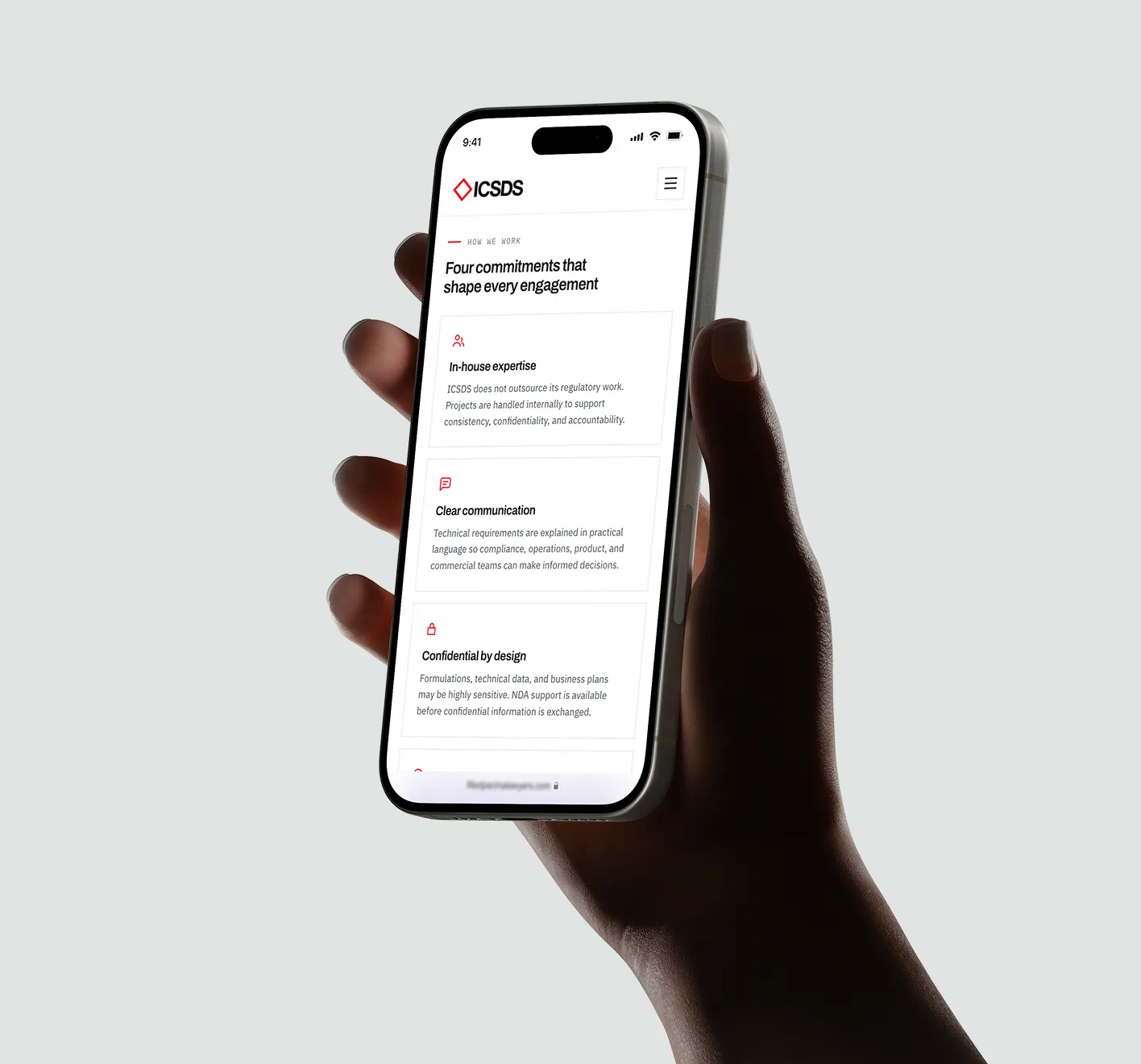
- Responsive component system for dark and light sections, cards, lists, service grids, CTA blocks, FAQs, and conversion modules.
- Reusable templates for service pages, problem pages, outcome pages, insights, and campaign landing pages.
- Content implementation across the expanded sitemap with consistent headings, labels, buttons, and internal links.
- Mobile behavior built around task-first navigation, single-column forms, tap-to-call access, and clear CTA placement.
- SEO-ready structure with deliberate heading hierarchy, page relationships, crawlable content, and migration considerations for legacy URLs.
- Form and intake structure designed for progressive qualification and conditional collection of technical files or product details.
- A foundation that can support analytics, conversion tracking, call tracking, campaign attribution, and future CRM integration.
From design to build
- Systemize: Convert approved layouts into reusable components.
- Build: Develop page families and responsive states.
- Populate: Implement copy, CTAs, imagery, links, and metadata.
- Refine: Review spacing, hierarchy, interactions, and edge cases.
The result is a system that can grow with ICSDS: new regulatory services, market-specific resources, paid campaigns, and insight content can be added within an established visual and structural framework rather than requiring a new design language each time.
QA, Delivery & Launch
Launch was treated as a controlled transition, not the final design handoff.
A regulatory website has little room for ambiguity. Final delivery therefore required review across content, responsive behavior, conversion paths, links, forms, visual consistency, and the relationship between the main website and its new acquisition journeys.
Pre-launch review
- Content: Page copy, headings, CTAs, terminology, disclosures, and governance-page placement.
- Experience: Navigation, intent routing, service/solution cross-links, mobile behavior, and form progression.
- Visual: Dark/light balance, imagery, component consistency, spacing, contrast, and responsive layouts.
- Functional: Buttons, forms, document-upload states where applicable, phone links, internal links, and destination pages.
- Search: Indexable content, page hierarchy, metadata readiness, URL mapping, and internal linking.
Measurement readiness: Conversion points and acquisition paths structured so tracking can be implemented and validated systematically.
Delivery and launch
Following final approvals, the production experience was deployed and validated in the live environment. The launch connected the new positioning, expanded service architecture, solution-led journeys, conversion system, custom imagery, and campaign-ready content into one cohesive ICSDS digital platform.
Launch Standard: The experience had to feel precise enough for a regulatory specialist, clear enough for a first-time buyer, and structured enough for the marketing team to measure and improve.
Post-launch growth foundation
The launched platform provides a clearer base for the next phase of growth: reliable conversion measurement, landing-page testing, paid-search pilots, search-term analysis, lead-quality feedback, CRM/revenue attribution, and ongoing content expansion. The website is not only the finished deliverable; it is the operating surface for future acquisition and optimization.

Explore More from OWDT
Each project we undertake is a study in precision — where design, technology, and storytelling converge. Discover more of our work and see how we help institutions, brands, and innovators shape digital experiences that endure.
Have Us Contact You

CLOSE PANEL
Thank You.
Your information has been transmitted successfully and securely.
CLOSE PANEL