
Guiding a brand two thousand years later
How Biruni Shape Us
Biruni Philosophy
Methodical
Approach to Digital
Performance.
Digital systems are not isolated artifacts, they are interconnected structures
shaped by design, behavior, data, and intent.
The Biruni Philosophy defines how OWDT studies, structures, and improves these systems.
Rather than treating websites as static outputs, we approach them as dynamic systems that can be
analyzed, structured, and continuously improved.
Observation
Identify patterns in user behavior and system performance to understand where friction and inefficiencies occur.
Measurement
Establish accurate tracking and visibility across key interactions, enabling informed decisions.
Structure
Organize digital systems into clear, interconnected layers to support usability, scalability, and performance.
Alignment
Ensure consistency between content, design, user expectations, and business objectives.
A System, Not Isolated Elements
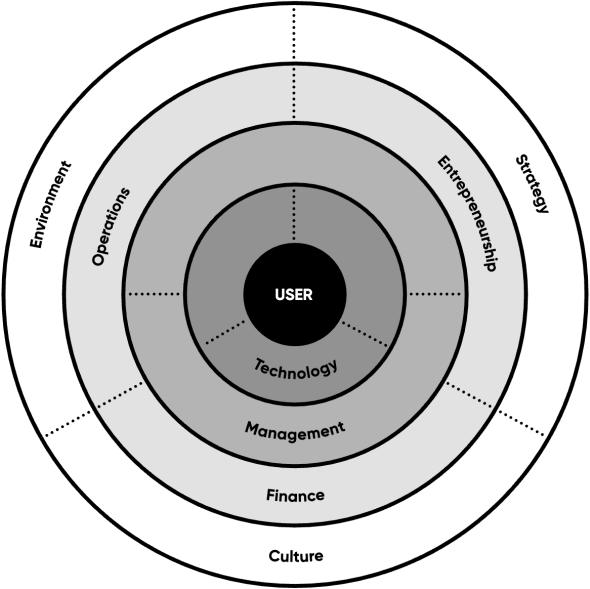
Why Most Digital Systems Underperform
Organizations often invest in redesigns or campaigns without diagnosing underlying system issues.
Without alignment across user behavior, business objectives, and technical infrastructure, these efforts result in fragmented systems and inconsistent outcomes. Performance issues are rarely isolated, they are structural.

The Principle
Digital Systems
Require Structured
Evaluation.
Every digital platform operates across multiple layers.
Every digital platform operates across multiple layers and well-defined improvement requires a solid understanding of how these layers interact.
01
Experience
How users interact with and navigate digital platforms.
02
Structure
How information and systems are organized and connected.
03
Measurement
How behavior and performance are captured and interpreted.
04
Performance
How performance is tracked, analyzed, and understood.
The Digital Performance Framework
Design-led growth is implemented through the Digital Performance Framework, which evaluates performance across five key dimensions. This ensures that design decisions are not isolated, but connected to measurable performance outcomes.
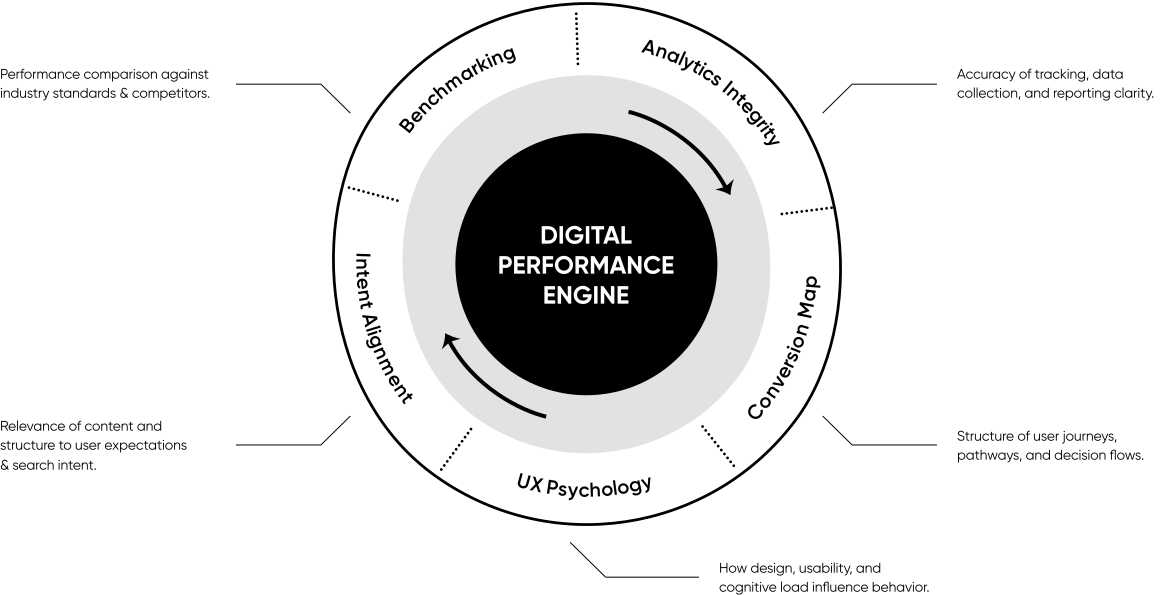
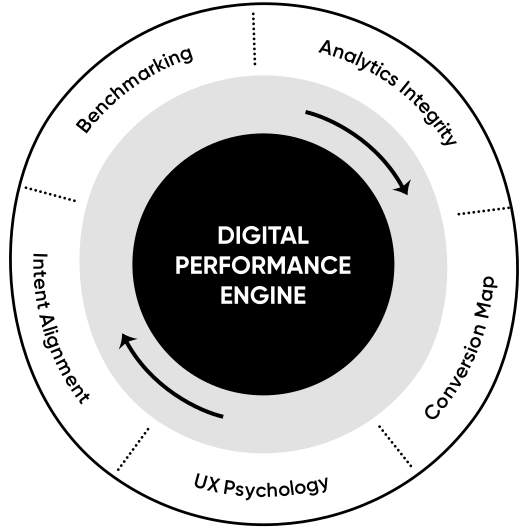
Analytics Integrity
Accuracy of tracking, data collection, and reporting clarity.
Conversion Map
Structure of user journeys, pathways, and decision flows.
UX Psychology
How design, usability, and cognitive load influence behavior.
Intent Alignment
Relevance of content and structure to user expectations & search intent.
Benchmarking
Performance comparison against industry standards & competitors.
The Strategic Backbone
From Philosophy to
Measurable
Performance.
The Biruni Philosophy is not theoretical, it defines how we diagnose,
structure, and improve digital systems.
It ensures that every decision is grounded in analysis, not assumption.
Biruni (Philosophy)
Explains how we think
Audit (Entry Point)
Defines how we diagnose
Strategy
Defines what should be done
Capabilities
Executes how it gets implemented
The first step is the Digital Performance Audit, where these principles are applied to identify structural inefficiencies, behavioral friction,
and missed opportunities.

Next Step
Begin with
Clarity.
Clarity is the first step toward scalable, measurable growth.
Before redesigning or investing further in digital initiatives, organizations
benefit from understanding what limits performance.
Have a Specialist Contact You

CLOSE PANEL
Tell Us About The Recipient
CLOSE PANEL
We’re collecting this information solely to email you the download link; we won’t use it for mass emails or share it with anyone else. By submitting this information, you’re not entering into any legal agreement, and your data will be securely stored.
Thank You.
Your information has been transmitted successfully and securely.
CLOSE PANEL
Thank You.
Your information has been transmitted successfully and securely.
Please check your email for the download link.
CLOSE PANEL