
Scalable Performance
Digital Architecture
Structuring digital systems to enable scalable performance.
We design the underlying structure of digital systems; ensuring that data, experience, and execution work together as a unified engine.

The Problem
Why Digital Systems
Break Down.
Without architecture, optimization has no foundation, performance remains inconsistent, fragile, and difficult to scale.
Most digital platforms grow through incremental decisions without a unified structure, leading to systems that are hard to scale or optimize. Digital architecture defines how components connect, ensuring a cohesive system where design, content, and technology work together.
The Digital Performance Framework
Digital architecture translates the Digital Performance Framework into structured systems; defining how analytics, experience, content, and technology connect and operate together.

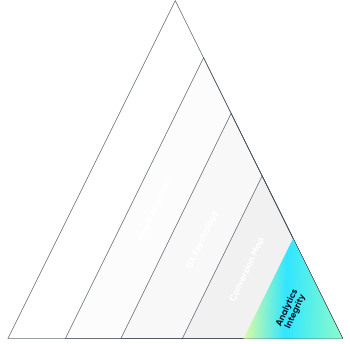
Analytics Integrity
Accuracy of tracking, data collection, and reporting clarity.
Conversion Map
Structure of user journeys, pathways, and decision flows.
UX Psychology
How design, usability, and cognitive load influence behavior.
Intent Alignment
Relevance of content and structure to user expectations & search intent.
Benchmarking
Performance comparison against industry standards & competitors.

The System
The Foundations of
Digital Architecture.
Effective architecture aligns multiple layers into a coherent system.
Explore how structured systems drive performance, scalability, and long-term growth.
01
Experience
How users interact, navigate, & move through the system.
02
Content
How information is structured, prioritized, & delivered.
03
Data
How behavior & performance are captured, tracked, & interpreted.
04
Application
How tools, platforms, & workflows are integrated.
05
Performance
How outcomes are measured, optimized, & scaled.
From Fragmented Systems to Structured Architecture.
Most digital systems evolve in fragments; tools, campaigns, and workflows added over time without structure.
Architecture aligns these components into a unified system; creating clarity, consistency, and scalability.
Unified Systems
Before:
Fragmented
Disconnected tools and platforms
After:
Structured
Integrated systems and workflows
Consistent Experience
Before:
Fragmented
Inconsistent user experience
After:
Structured
Consistent user experience
Clear Insights
Before:
Fragmented
Limited data visibility
After:
Structured
Clear data flow and measurement
Scalable Growth
Before:
Fragmented
Difficult to scale
After:
Structured
Scalable and adaptable
Insight
What web design can learn from music
The most effective websites are not just functional. They are composed. With rhythm, harmony, melody, and dynamics, web design becomes more intuitive, cohesive, and memorable.
ContinueInsight
How do social signals influence SEO rankings?
From shares to sentiment, this breakdown of social signals reveals how user engagement can impact SEO rankings.
ContinueInsight
The complete guide to product branding for modern marketers
A comprehensive overview of product branding principles, from positioning and design to storytelling and digital experiences.
ContinueInsight
How to build a complete marketing 360 strategy
A 360 marketing strategy unifies every customer touchpoint into one data-driven system. Discover how AI personalization and cross-channel integration help brands turn attention into lasting loyalty.
ContinueInsight
Web design and marketing synergy: Secrets to higher traffic and sales
In today’s digital economy, design and marketing must work together. This article demonstrates how their synergy fosters trust, enhances brand strength, and drives sales.
ContinueInsight
The future of AI in B2B marketing: From data to deals
AI is transforming B2B marketing with data-driven precision, personalization, and automation that optimize campaigns and drive growth.
ContinueInsight
SEO copywriting tips every marketer needs in 2025
From keyword placement to user-focused storytelling, SEO copywriting tips show how brands can craft content that ranks well, engages readers, and converts.
ContinueEntry Point
Architecture Starts
with Diagnosis.
The Digital Performance Audit evaluates how your systems are
structured; identifying inefficiencies, integration gaps, and
performance limitations.
Design-led growth depends on structured systems. Digital architecture ensures that design decisions are
supported by data, scalable systems, and measurable outcomes.
From Design to Measurable Growth.
Design-led growth is applied through a structured process.
Diagnose
Identify structural weaknesses and system-level bottlenecks.
Structure
Define how components should be organized and connected.
Integrate
Align tools, data, and workflows into a unified system.
Optimize
Continuously refine architecture based on performance insights.

Next Step
Build Systems That
Perform at Scale.
Structure your digital platform to support performance, scalability, and long-term growth.
Digital architecture transforms fragmented systems into structured environments where design, data, and technology work together – enabling consistent, measurable growth.
Have a Specialist Contact You

CLOSE PANEL
Tell Us About The Recipient
CLOSE PANEL
We’re collecting this information solely to email you the download link; we won’t use it for mass emails or share it with anyone else. By submitting this information, you’re not entering into any legal agreement, and your data will be securely stored.
Thank You.
Your information has been transmitted successfully and securely.
CLOSE PANEL
Thank You.
Your information has been transmitted successfully and securely.
Please check your email for the download link.
CLOSE PANEL