
Structured
Digital Performance Framework
A structured methodology for analyzing, prioritizing, and improving performance.
Inspired by the Biruni Philosophy, this framework integrates design, analytics, and engineering into a unified model for measurable growth.

Foundation
Our Approach
to Complexity.
Most organizations rely on isolated initiatives that lead to fragmented performance. OWDT evaluates digital platforms as interconnected systems, not static outputs; using observation, measurement, and structured analysis.
Effective improvement requires a system-level perspective.
Observation
Identify patterns and behaviors across digital systems to understand how users interact and where performance breaks down.
Measurement
Ensure data accuracy and visibility across key events, enabling reliable analysis and decision-making.
Structure
Organize digital systems into clear, interconnected layers to support usability, scalability, and performance.
Alignment
Ensure consistency between content, design, user expectations, and business objectives.
Prioritization
Focus on the highest-impact opportunities to drive measurable improvement efficiently.
Iteration
Continuously refine performance through testing, learning, and structured optimization.
Integration
Connect systems, tools, and data flows to operate as a unified environment rather than isolated components.
Scalability
Design systems that can grow efficiently, supporting increased complexity, traffic, and performance demands over time.
The Digital Performance System
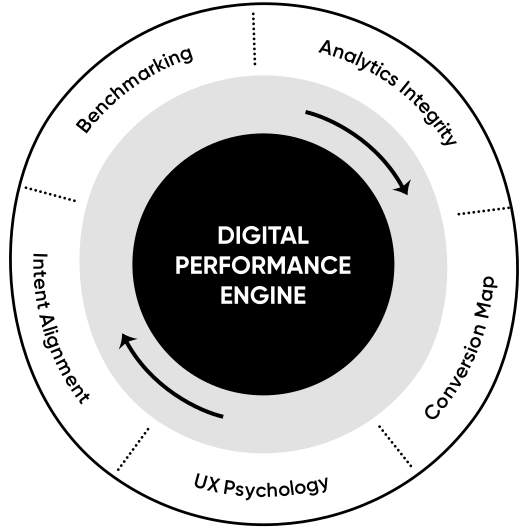
Five interconnected dimensions that determine
how digital platforms perform.
These dimensions are evaluated together to understand how systems perform and where improvements are required.
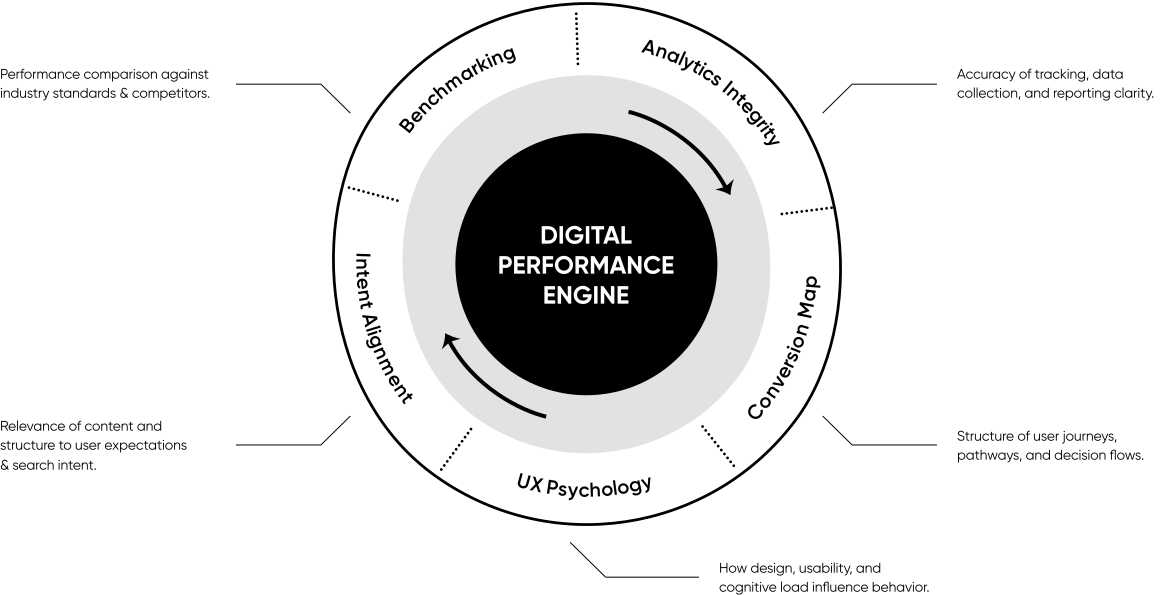
Analytics Integrity
Accuracy of tracking, data collection, and reporting clarity.
Conversion Map
Structure of user journeys, pathways, and decision flows.
UX Psychology
How design, usability, and cognitive load influence behavior.
Intent Alignment
Relevance of content and structure to user expectations & search intent.
Benchmarking
Performance comparison against industry standards & competitors.

Process
Digital Growth
Maturity Tiers.
These tiers define how advanced your digital performance systems are, and what it takes to improve them. These tiers are not descriptive, they directly guide how digital decisions should be made.
01
Foundational
You are in foundational stage if you have:
- Incomplete or incorrect tracking
- Weak or non-existent SEO presence
- Poor user experience & low conversion rates
- No clear funnel or attribution
02
Developing
You are in Developing stage if you have:
- Basic tracking with limited accuracy
- Early SEO visibility with low authority
- Unstable performance from paid channels
- Limited use of data in decision-making
03
Competitive
You are in Competitive stage if you have:
- Strong Tracking & Attribution Systems
- Consistent Lead Generation
- Solid User Experience & Conversion Rates
- Defined funnel with clear stages
04
Market Leading
You are in Market Leading stage if you have:
- Fully integrated analytics & CRM systems
- Strong SEO authority & content performance
- Highly Optimized Paid Media Performance
- Continuous testing & optimization
Insight
What web design can learn from music
The most effective websites are not just functional. They are composed. With rhythm, harmony, melody, and dynamics, web design becomes more intuitive, cohesive, and memorable.
ContinueInsight
How do social signals influence SEO rankings?
From shares to sentiment, this breakdown of social signals reveals how user engagement can impact SEO rankings.
ContinueInsight
The complete guide to product branding for modern marketers
A comprehensive overview of product branding principles, from positioning and design to storytelling and digital experiences.
ContinueInsight
How to build a complete marketing 360 strategy
A 360 marketing strategy unifies every customer touchpoint into one data-driven system. Discover how AI personalization and cross-channel integration help brands turn attention into lasting loyalty.
ContinueInsight
Web design and marketing synergy: Secrets to higher traffic and sales
In today’s digital economy, design and marketing must work together. This article demonstrates how their synergy fosters trust, enhances brand strength, and drives sales.
ContinueInsight
The future of AI in B2B marketing: From data to deals
AI is transforming B2B marketing with data-driven precision, personalization, and automation that optimize campaigns and drive growth.
ContinueInsight
SEO copywriting tips every marketer needs in 2025
From keyword placement to user-focused storytelling, SEO copywriting tips show how brands can craft content that ranks well, engages readers, and converts.
ContinueNews
OWDT Redesigns The Museum of Fine Arts, Houston Digital Experience
The new MFAH.org is built on a design system that mirrors the museum’s architectural calm and visual clarity.
ContinueInsight
Luxury color palette for web design: Boost visual appeal and UX
Learn the principles of high-end color palettes that boost trust, engagement, and brand sophistication.
ContinueFrom Evaluation to Action.
The Digital Performance Framework is applied
through the Digital Performance Audit — a
structured evaluation of your platform across all
five dimensions. This process identifies structural
inefficiencies, behavioral friction, and
opportunities for improvement before further
investment is made.
The audit determines your current maturity level,
providing clarity on where to focus and how to
scale effectively.
Diagnose
Evaluate performance across all five dimensions to identify structural limitations.
Prioritize
Determine the highest-impact opportunities based on evidence and strategic value.
Execute
Implement improvements across design, structure, and systems.
Optimize
Continuously refine performance through measurement and iteration.

Next Step
Bring Structure to your
Digital Performance.
Apply a structured approach to your digital systems and identify where performance can be improved before scaling further.
The Digital Performance Framework provides a structured way to understand and improve your platform, ensuring that every decision is guided by clarity, evidence, and measurable impact. Instead of isolated improvements, it enables a system-level approach where strategy, design, and performance work together.
Thank You.
Your information has been transmitted successfully and securely.

CLOSE PANEL
Thank You.
Your information has been transmitted successfully and securely.
Please check your email for the download link.
CLOSE PANEL
Have a Specialist Contact You
CLOSE PANEL
Tell Us About The Recipient
CLOSE PANEL
We’re collecting this information solely to email you the download link; we won’t use it for mass emails or share it with anyone else. By submitting this information, you’re not entering into any legal agreement, and your data will be securely stored.